The Complete Guide to Forge of Empires Avatars: Unlocking, Rarity, and Customization
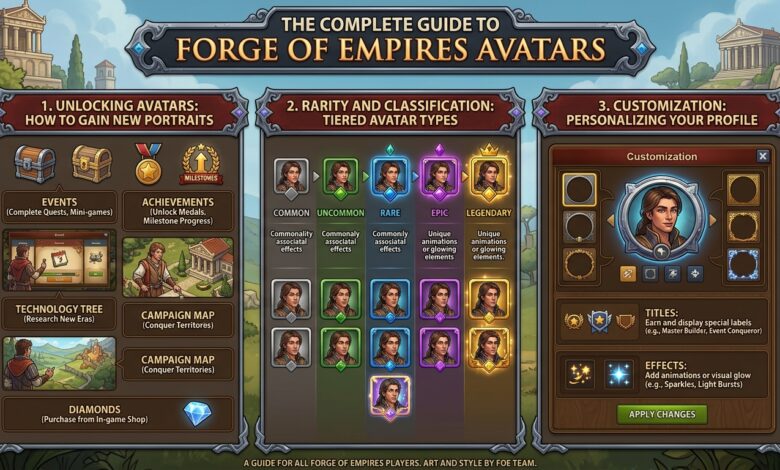
Table of Contents
| Section | Description |
|---|---|
| 1. Introduction to Forge of Empires Avatars | Understanding the role and value of avatars |
| 2. Avatar Rarity and Tier System | Common, Uncommon, Rare, and Epic breakdown |
| 3. Core Methods to Unlock Avatars | Campaign map, guild expeditions, events, and purchases |
| 4. Event Exclusive Avatars | Historical and seasonal limited-time avatars |
| 5. Premium and Diamond Avatars | Paid vs. earned avatar distinctions |
| 6. Avatar Customization and Strategy | How avatars affect reputation and social play |
| 7. Frequently Asked Questions (FAQs) | Common user queries resolved |
| 8. Future of Avatars in Forge of Empires | Upcoming trends and developer updates |
1. Introduction to Forge of Empires Avatars
Forge of Empires avatars represent your digital identity within the vast historical strategy game developed by InnoGames. An avatar is more than a simple profile picture; it is a visual badge of your progress, achievements, alliances, and participation in exclusive events. Every player, from a Bronze Age beginner to a Space Age Titan veteran, uses an avatar to represent themselves in guilds, global rankings, and neighborhood chats. The Forge of Empires avatar system has evolved significantly since the game’s launch. Initially, players had only a handful of generic character portraits. Today, the game features over five hundred unique avatars, including historical figures, mythical creatures, special event mascots, and animated pixel art. Understanding how to unlock, select, and optimize your avatar can enhance your gaming experience, increase your social standing, and even provide psychological advantages in guild negotiations. This guide covers every aspect of Forge of Empires avatars, ensuring you never overlook a rare or valuable portrait again.
2. Avatar Rarity and Tier System
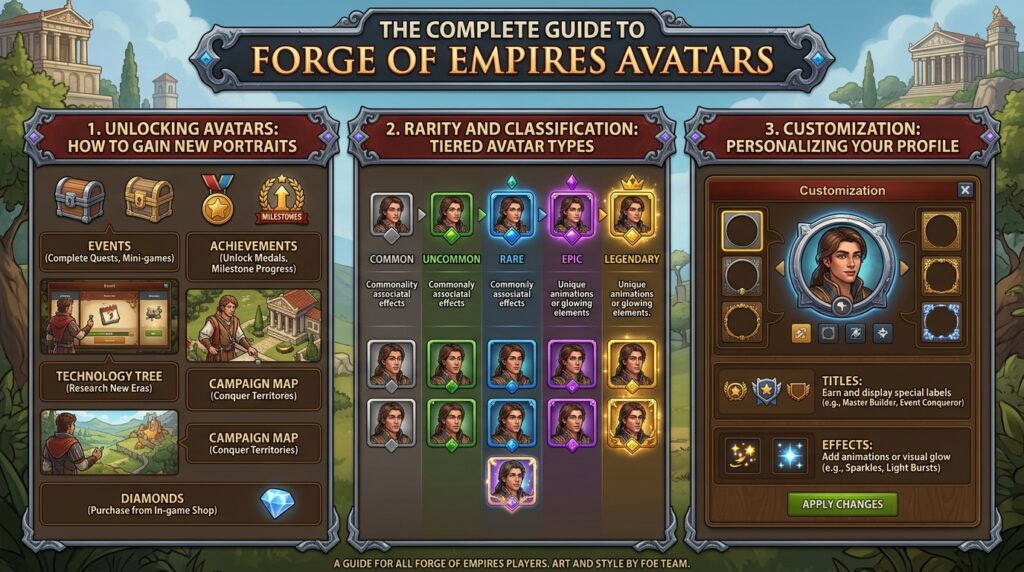
All Forge of Empires avatars belong to a structured rarity system that determines their unlock difficulty and perceived value. The four standard tiers are Common, Uncommon, Rare, and Epic. Common avatars are typically unlocked by default when you start a new city or complete basic tutorial quests. These include simple soldier portraits, peasant figures, and basic animal icons. Uncommon avatars require specific actions such as conquering a certain number of provinces or reaching a particular age. Rare avatars are often tied to guild expeditions, daily challenges, or limited-time historical questlines. Epic avatars represent the highest tier and are almost exclusively obtained through major seasonal events, top-tier guild battlegrounds rewards, or diamond purchases. Additionally, a fifth hidden tier exists known as Legacy avatars. Legacy avatars are no longer obtainable through normal gameplay. Players who own Legacy avatars often display them as a mark of seniority. Examples include the original 2012 Beta Tester avatar and the 2014 Winter Event exclusive portrait. Understanding these tiers helps you prioritize which events to participate in and which achievements to pursue.
3. Core Methods to Unlock Avatars
There are five primary methods to unlock new Forge of Empires avatars. The first method is the campaign map. Each time you conquer a new province and acquire its associated sector, you have a chance to earn a regional avatar. For example, conquering provinces in the Iron Age unlocks Celtic warrior portraits. The second method is the guild expedition. Reaching level four of the guild expedition each week guarantees at least one rare avatar fragment. Collect enough fragments to forge the full avatar. The third method is special events. Seasonal events like the Forge Bowl, Summer Event, Halloween Event, and Winter Event each introduce five to ten exclusive avatars. These are often tied to event quest milestones. The fourth method is the antique dealer. The antique dealer occasionally sells retired avatars for trade coins and gemstones. Checking the dealer inventory daily is essential for collectors. The fifth method is direct purchase via diamonds. The in-game avatar shop updates monthly with premium portraits. Some premium avatars provide no gameplay advantage but display exclusive animated effects such as glowing borders or moving backgrounds. A sixth passive method involves guild battlegrounds. Reaching high league positions awards avatar chests containing rare or epic portraits.
4. Event Exclusive Avatars
Event exclusive avatars are the most sought-after category in Forge of Empires. These avatars are only available during specific real-world timeframes, often tied to cultural celebrations or game anniversaries. The Forge Bowl event introduces sport-themed avatars such as the Quarterback and the Goal Keeper. The Summer Event offers tropical avatars like the Pirate Captain and the Mermaid Queen. The Halloween Event features gothic and horror avatars including the Headless Horseman and the Witch of the Woods. The Winter Event provides festive avatars like the Snow King and the Gingerbread General. Anniversary events, celebrating Forge of Empires’ launch date, produce unique avatars that never return. For instance, the 5th Anniversary avatar features a golden crown, while the 10th Anniversary avatar depicts a Roman numeral X made of forge hammers. Players who miss these events cannot obtain the avatars through any other means, including the antique dealer. This scarcity drives high trading value among collectors. Some event avatars also include hidden animations. The Dragon Boat avatar from the Summer Event shows oars moving, while the Fireworks Mage from the Anniversary event displays small explosions around the portrait.
5. Premium and Diamond Avatars
Premium avatars in Forge of Empires are those purchased exclusively with diamonds, the game’s premium currency. These avatars do not affect combat statistics or production speeds. However, they offer distinct cosmetic advantages. Many premium avatars feature dynamic backgrounds. For example, the Space Pioneer avatar shows a rotating planet behind the character, while the Deep Sea Diver avatar has floating bubbles. Another subcategory is the guild founders pack avatars. When a player establishes a new guild and invests diamonds into guild levels, the founder receives a unique gold-trimmed avatar visible only to guild members. These founder avatars cannot be traded or sold. The diamond shop also rotates monthly limited premium avatars. These often tie into current historical anniversaries. For example, during March, a Julius Caesar premium avatar appears. During November, a Vikings premium avatar is offered. Players should note that premium avatars are often re-released after six to twelve months, unlike event exclusives which may never return. Spending diamonds on avatars is a personal choice. Veteran players recommend prioritizing expansion slots and special buildings first. Only after securing core gameplay advantages should collectors invest diamonds in premium avatars.
6. Avatar Customization and Strategy
Beyond aesthetics, Forge of Empires avatars play a subtle strategic role. In guild negotiations and PvP tower discussions, players often judge others based on their avatar. An epic or legacy avatar commands more respect and can intimidate opponents during guild battlegrounds. Moreover, certain avatars signal specific player behaviors. For instance, a player using a military general avatar is often perceived as aggressive and likely to attack neighbors. A player using a trader or merchant avatar is seen as peaceful and focused on economic growth. Guild leaders sometimes require members to wear specific avatars to show unity during guild vs. guild wars. This practice is called avatar synchronization. Another strategic use involves avatar swapping. Changing your avatar before entering neighborhood negotiations can influence how other players interact with you. Using a new player avatar (such as the default Bronze Age portrait) may cause stronger players to underestimate your city defense capabilities. Conversely, using a rare Space Age avatar warns neighbors not to plunder your city. Advanced players maintain three to five standard avatars: one for war, one for trade, one for guild events, and one for casual play. The game remembers your last selected avatar, so you can switch freely at any time from the profile menu without cost.
7. Frequently Asked Questions (FAQs)
Q1: Can I trade avatars with other players in Forge of Empires?
No, Forge of Empires currently does not allow direct avatar trading between players. The only way to obtain retired or event avatars is through the antique dealer if they are made available.
Q2: Do avatars provide any in-game stat bonuses?
No, avatars are purely cosmetic. They do not increase attack, defense, production speed, or any other measurable stat. Their value is social and aesthetic only.
Q3: How can I see all avatars I have unlocked?
Click on your profile picture in the top left corner of the main game interface. Then click the camera icon or Change Avatar button. This opens the full avatar gallery showing all owned and locked avatars.
Q4: What is the rarest avatar in Forge of Empires?
The rarest is the original Beta Tester avatar from 2012, followed by the Moderator Choice award avatar given to community helpers. These are seen on fewer than 0.01 percent of active accounts.
Q5: Can I use the same avatar on multiple worlds?
No, avatars are unlocked per world. If you unlock a rare avatar on world Langendorf, you must unlock it again separately on world Cirgard or any other server.
Q6: Are animated avatars available?
Yes, certain epic and premium avatars feature minor animations such as blinking eyes, moving backgrounds, or glowing effects. These are clearly marked with a small sparkle icon in the avatar shop.
Q7: What happens to my avatar if I delete my city?
Deleting your city removes all progress including unlocked avatars on that specific world. Your account on other worlds remains unaffected. Always confirm before city deletion.
Q8: Can guilds create custom avatars?
No, custom avatar uploads are not supported. All avatars must be from the official in-game gallery to prevent inappropriate images and ensure fair play.
8. Future of Avatars in Forge of Empires
The development team continuously expands the Forge of Empires avatar system. Recent updates in 2024 introduced NFT-style unique identifiers for certain championship avatars, proving authentic ownership without blockchain. Another upcoming feature is animated seasonal avatars that change appearance based on real-world seasons. For example, a tree avatar shows green leaves in spring, brown leaves in autumn, and snow in winter. The developers also plan to implement avatar showcases in guild halls. Guild members will be able to display their five rarest avatars on a virtual wall visible to all visitors. This feature is expected to launch in the second half of 2026. Additionally, a new rarity tier called Mythic is under internal testing. Mythic avatars will require combining five epic avatars plus a Mythic fragment obtained from finishing in the top ten of global championship events. As Forge of Empires celebrates its fourteenth year, the avatar system continues to grow. New players should focus on unlocking daily challenge avatars and event avatars first, as these offer the best variety for minimal time investment. Veterans should monitor the antique dealer and save diamonds for anniversary events. Regardless of play style, every player can find an avatar that reflects their journey from a humble Stone Age settlement to a mighty Space Age empire.