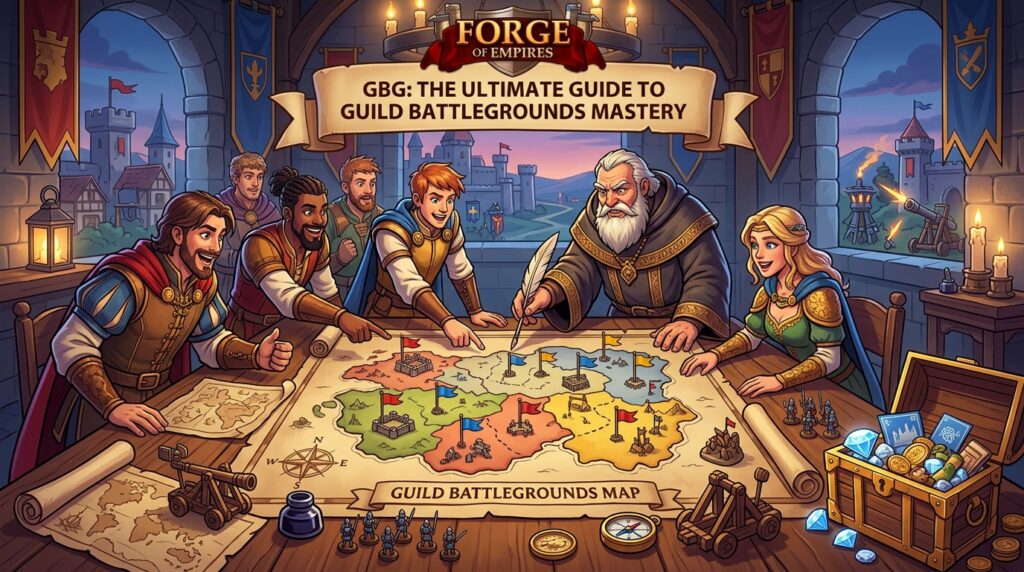
Forge of Empires GBG: The Ultimate Guide to Guild Battlegrounds Mastery
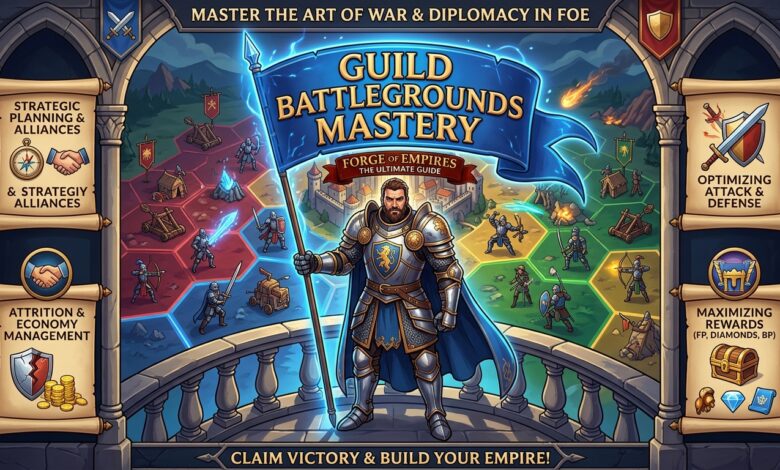
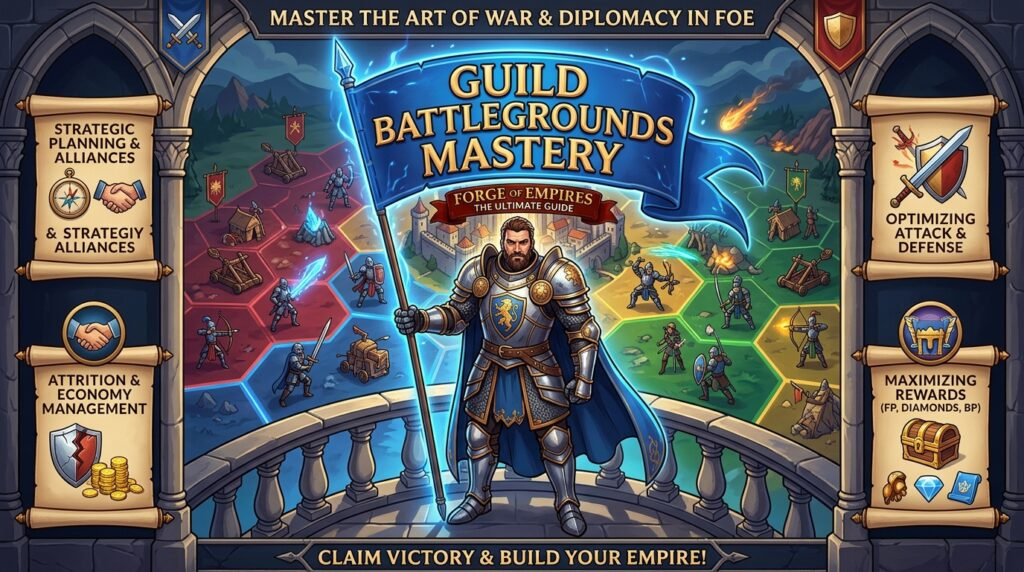
Forge of Empires GBG is a competitive, guild-based feature that redefines end-game content. Unlike the Guild versus Guild (GvG) map, Guild Battlegrounds offers a dynamic, asynchronous, and less time-restrictive environment where guilds of all sizes can compete. The primary objective in GBG is to control sectors on a large map, earn victory points, and climb through league rankings. This guide provides a comprehensive breakdown of every mechanic, strategy, and reward system associated with Forge of Empires GBG. Understanding these elements is crucial for any player who wants to contribute effectively. The mode operates in seasons, each lasting several days, followed by a short break before the next season begins. Guilds are matched based on their league and guild power, ensuring relatively balanced competition. For new and veteran players alike, mastering GBG is the fastest path to acquiring advanced buildings, Forge Points, and unique upgrades.
Core Mechanics of GBG
The Forge of Empires GBG map consists of a central hub with several sectors radiating outward. Each sector grants bonuses to the guild that controls it. To capture a sector, guild members must place negotiations or fight battles to fill a sector’s progress bar. Each successful action contributes one point to the guild’s progress on that sector. The number of actions required to seize a sector depends on the number of adjacent sectors owned. A sector with no adjacent friendly sectors requires more actions. Conversely, a sector adjacent to a friendly sector requires fewer actions. This mechanic encourages strategic expansion. Every action costs action points. Each player receives a default number of action points per day. These points regenerate over time but can also be increased using specific boosts or buildings. The speed and efficiency with which a guild uses these points determine success. Furthermore, each sector may have up to three buildings that provide defensive or offensive bonuses. Destroying these buildings before attacking the sector is essential for efficient progress.
Building Your GBG Strategy
A successful Forge of Empires GBG strategy begins with communication. The guild leadership must assign roles. Fighters focus on defeating enemy armies to fill the sector bar. Negotiators use goods to complete negotiation puzzles. Both are equally valid. The choice depends on a player’s city layout and available resources. Fighters rely on attack boost for the attacking army. Negotiators rely on a diverse stock of all ages’ goods. Early in a GBG season, focus on expanding outward from the base. Secure sectors that provide production boosts. Sectors with the “Forge Point” production bonus should be prioritized. Other valuable bonuses include guild power increase and action point recovery. A common tactic is the “diamond” formation. This involves holding four sectors that form a perimeter around a central high-value sector. Once the perimeter is secure, the guild captures the central sector with minimal resistance. Another essential strategy is the “sprint.” During the final hours of a GBG season, guilds dump all remaining action points into capturing undefended sectors to overtake opponents. Timing and coordination are the most critical factors.
Attrition and Its Management
Attrition is the single most defining mechanic in Forge of Empires GBG. Each time a player defeats an enemy in a sector, their personal attrition level increases by 1 point. Higher attrition leads to stronger enemy armies. At low attrition, enemies are easy. At high attrition, enemy units have massive attack and defense boosts. This makes fights impossible unless the player has an extremely high attack boost. Managing attrition is the key to sustained contribution. The best method to lower attrition is to simply wait. Attrition decays over time at a rate of 1 point per hour. However, several buildings and boosts accelerate this decay. The Sentinel Outpost and the Carousel are examples of buildings that reduce attrition gain or increase decay rate. Players should alternate between fighting and negotiating. Negotiations do not increase attrition. Therefore, a balanced player can fight until attrition becomes too high, then switch to negotiating. This extends their useful time on the map. Another advanced tactic is the “attrition run.” A dedicated fighter with a very high attack boost pushes attrition to extremely high levels to clear a difficult sector quickly. This is reserved for late-game players.
Rewards and Progression System
The primary reward from Forge of Empires GBG is the Guild Battlegrounds rewards chest. There are two types of rewards: personal rewards and guild rewards. Personal rewards are based on individual performance. Each player earns a score based on their fights and negotiations. At the end of the season, players receive fragments of buildings, Forge Points, goods, and medals. The higher the individual score, the better the chest. Guild rewards are based on the guild’s final league placement. Leagues range from Copper to Diamond. Diamond league offers the best rewards. The most sought-after reward is the Fragment of the Sentinal Outpost or the Fragment of the Royal Bathhouse. These buildings provide permanent attack boosts and attrition reduction. Another valuable reward is the Forge Point package. High-level GBG play can yield over 100 Forge Points per day. Additionally, the Victory Points earned by the guild unlock progressive rewards throughout the season. At certain thresholds, all guild members receive a reward instantly. This system encourages continuous participation from the first day to the last.
Advanced Tactics for High-Level Play
Elite guilds in Forge of Empires GBG use several advanced tactics. One tactic is “scouting.” One player enters a sector, loses deliberately, and reports the enemy unit composition to the guild chat. This allows fighters to choose the best counter units. Another tactic is “boarding.” This involves surrounding a guild’s base with your own sectors, cutting them off from expansion. A cut-off guild cannot access new sectors without first recapturing a path. This is highly aggressive but effective. The “swap” tactic is used in low-attrition farming. Two guilds cooperate to swap a neutral sector back and forth. Each fight generates rewards for both sides without increasing attrition to dangerous levels. However, this is considered unethical by many players. For legitimate play, the focus should be on building a specialized GBG city. This means prioritizing event buildings that provide attack boost for the attacking army and defense boost for the attacking army. The player’s city should have zero decorations or inefficient housing. Every tile must contribute to combat power. Finally, use the “1.9 thread” or equivalent to level combat Great Buildings. The Alcatraz, Zeus, Cathedral of Aachen, and Castel del Monte are non-negotiable for any serious GBG fighter.
Frequently Asked Questions (FAQs)
Q1: What is the difference between GvG and GBG in Forge of Empires?
A1: GvG is a real-time, map-based territory control system available only on the PC version. GBG is a cross-platform, asynchronous, league-based system available on PC, mobile, and tablet. GBG is more accessible and has no fixed start time.
Q2: How often do GBG seasons start?
A2: A new Forge of Empires GBG season typically starts every two weeks. There is a 24 to 48 hour break between the end of one season and the start of the next.
Q3: Can I reduce attrition in GBG without waiting?
A3: Yes. Certain buildings and temporary boosts provide an attrition reduction effect. For example, the Sentinel Outpost reduces the chance of gaining attrition. Level 2 of the Royal Bathhouse allows you to remove attrition points directly.
Q4: Is fighting or negotiating better in GBG?
A4: Fighting is faster and uses no goods. Negotiation uses goods but avoids attrition. For long-term play, a hybrid strategy is best. Fight until attrition is high, then negotiate until goods run low.
Q5: What happens if my guild is demoted to a lower league?
A5: Demotion means you face weaker guilds and earn fewer victory points per action. The rewards chest quality decreases. The only way to return is to finish in the promotion zone during the next season.
Q6: How many action points do I get per day in GBG?
A6: The default is 50 action points. This amount can be increased by building specific structures like the Guild Battlegrounds action point boost buildings.
Single Line Keywords
Forge of Empires GBG, Forge of Empires Guild Battlegrounds guide, FOE GBG strategy, GBG attrition management, FOE competitive guild guide